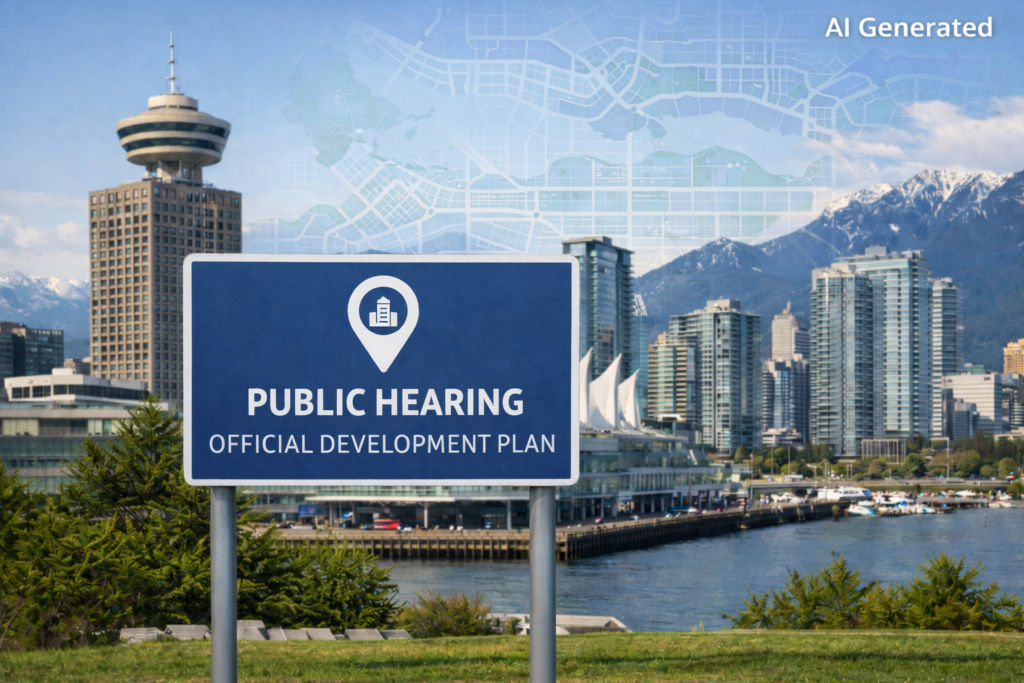

Vancouver is preparing to take a major step in shaping the future of the city as officials move forward with a public hearing on the city’s first-ever Official Development Plan (ODP). The proposed plan is expected to guide how land is used, developed, and managed in the coming decades, influencing everything from housing and infrastructure to transportation and community services.
City leaders say the initiative represents one of the most significant planning efforts Vancouver has undertaken in recent years. With population growth continuing across Metro Vancouver and housing demand rising sharply, the new development framework aims to provide a long-term strategy for sustainable urban growth.
The upcoming public hearing will allow residents, businesses, and community organizations to share their views before city council considers final approval of the plan.
What Is an Official Development Plan?
An Official Development Plan, often referred to as an ODP, is a comprehensive planning document that outlines how land within a specific area should be used over time. These plans are commonly used by municipalities across Canada to guide zoning, infrastructure development, and community planning.
For Vancouver, the proposed ODP would establish policies that influence how neighbourhoods evolve as the city continues to grow.
The plan may address a wide range of issues including:
- Housing density and residential development
- Transportation infrastructure and transit planning
- Environmental sustainability initiatives
- Public spaces and community facilities
- Economic development strategies
City planners say having a clear framework helps ensure that development projects align with the city’s long-term goals.
Why the Plan Is Being Introduced Now
The decision to introduce a comprehensive development plan comes at a time when Vancouver is facing significant pressures related to housing availability, population growth, and urban density.
Over the past decade, Vancouver has consistently ranked among the most expensive housing markets in Canada. Rising demand, limited land supply, and increasing construction costs have made affordability one of the city’s most pressing challenges.
City officials say the proposed development plan is intended to help address these issues by creating clearer guidelines for future housing development.
By planning ahead, the city hopes to ensure that new developments include appropriate infrastructure, services, and community amenities.
Public Participation in the Planning Process
A key component of the initiative is the upcoming public hearing, which will allow residents to provide feedback on the proposed plan.
Public hearings are a common part of municipal decision-making in British Columbia. They provide an opportunity for community members to share their perspectives before major planning decisions are finalized.
Residents may raise concerns about topics such as neighbourhood character, building heights, transportation impacts, and environmental considerations.
Others may support the plan as a way to address housing shortages and encourage sustainable development.
City council will review the feedback gathered during the hearing before making any final decisions.
Balancing Growth With Livability
One of the biggest challenges facing Vancouver planners is balancing growth with the qualities that make the city attractive to residents.
Vancouver is widely known for its natural beauty, walkable neighbourhoods, and strong environmental policies. Maintaining these qualities while accommodating population growth is a central goal of the proposed development plan.
Urban planning experts say successful development strategies must consider not only housing but also transportation networks, green spaces, and community services.
For example, higher-density housing developments often require improvements to public transit and infrastructure to ensure that neighbourhoods remain accessible and livable.
The proposed plan may also emphasize sustainable design practices aimed at reducing environmental impact.
Addressing the Housing Crisis
Housing affordability remains one of the most significant political issues in Vancouver and across British Columbia.
The city has seen a surge in population over the past several decades, driven by immigration, economic opportunities, and its reputation as one of the most desirable places to live in Canada.
However, limited land availability and strict zoning regulations have made it difficult to expand housing supply at the pace required to meet demand.
Supporters of the development plan say it could help address these challenges by allowing for more strategic and coordinated housing development.
Some planners argue that increasing housing density in certain areas could provide more options for residents while reducing urban sprawl.
Community Concerns and Debates
Despite potential benefits, development plans often generate strong debate within communities.
Some residents worry that increased density could change the character of established neighbourhoods or place additional pressure on local infrastructure.
Others are concerned about issues such as traffic congestion, school capacity, and the availability of public services.
On the other hand, housing advocates argue that limiting development can worsen affordability problems and reduce opportunities for new residents.
These competing perspectives highlight the complex nature of urban planning decisions.
Economic and Environmental Impacts
Beyond housing, the proposed development plan could also influence Vancouver’s economic growth and environmental policies.
Infrastructure projects, transportation improvements, and commercial development zones may all be shaped by the plan’s guidelines.
City officials have emphasized the importance of sustainable development practices, including reducing carbon emissions and protecting natural areas.
Vancouver has long positioned itself as a leader in environmental planning, and the development plan is expected to reflect those priorities.
This could include policies encouraging green buildings, expanded public transit, and increased access to parks and open spaces.
What Happens After the Public Hearing
Once the public hearing takes place, city council will review the feedback and consider potential adjustments to the proposed plan.
If approved, the Official Development Plan could become a key guiding document for future planning decisions in Vancouver.
Major development proposals may need to align with the policies outlined in the plan, ensuring that new projects contribute to the city’s long-term vision.
The plan could influence urban development in Vancouver for decades, shaping how neighbourhoods grow and how the city adapts to changing economic and environmental conditions.
A Turning Point for Vancouver’s Future
As Vancouver continues to evolve, planning decisions made today will have lasting effects on future generations.
The upcoming public hearing represents an important opportunity for residents to participate in shaping the city’s future.
Whether the focus is housing affordability, environmental sustainability, or economic development, the proposed Official Development Plan reflects the complex challenges facing modern cities.
For many Vancouver residents, the outcome of this process will help determine how the city grows while preserving the qualities that have made it one of Canada’s most vibrant urban centres.