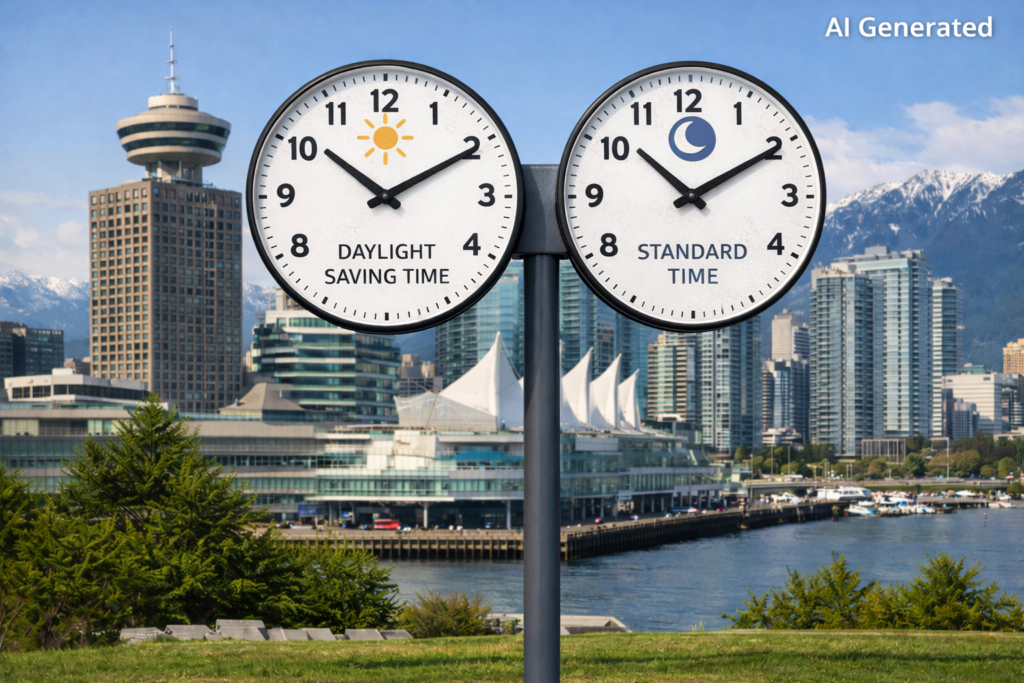


The debate around permanent daylight saving time in British Columbia has once again returned to the political spotlight. As the province moves forward with discussions about eliminating the twice-a-year clock change, lawmakers, health experts, and residents across Metro Vancouver and beyond are weighing the potential benefits and drawbacks of the proposal.
For decades, British Columbians have followed the familiar routine of turning their clocks forward in March and back again in November. While the time change was originally designed to make better use of daylight hours and reduce energy consumption, critics say the practice has become outdated and disruptive in modern society.
Now, provincial leaders are considering a major shift that could permanently end seasonal time changes and keep the province on daylight saving time year-round.
Why British Columbia Wants to End the Clock Change
The push to eliminate seasonal clock changes has gained momentum in recent years. Many residents say adjusting their schedules twice a year can disrupt sleep patterns, productivity, and overall well-being.
Research has shown that the sudden shift in time can lead to temporary health impacts, including sleep deprivation and fatigue. Some studies have even linked time changes to increased workplace accidents and traffic collisions in the days immediately following the adjustment.
Because of these concerns, several jurisdictions around the world have begun exploring ways to eliminate the clock change altogether.
In British Columbia, public consultations conducted by the provincial government previously showed strong support for ending the seasonal time adjustment.
Many residents expressed a preference for longer daylight hours in the evening, particularly during the winter months.
What Permanent Daylight Saving Time Would Mean
If implemented, permanent daylight saving time would mean that British Columbia would remain on the same time schedule throughout the entire year. Residents would no longer need to change their clocks every spring and fall.
Supporters of the idea say the change could bring several advantages.
For one, longer daylight hours in the evening could encourage outdoor activities, tourism, and local business activity. Restaurants, retail shops, and entertainment venues may benefit from having more daylight later in the day.
The change could also simplify scheduling for families and businesses by eliminating the confusion that sometimes comes with time changes.
Many people say the convenience alone makes the idea appealing.
Health Experts Raise Concerns
Despite widespread public support, the proposal has also drawn criticism from some medical experts.
Sleep scientists and health professionals have warned that permanent daylight saving time may not align with the natural circadian rhythms of the human body.
These rhythms are influenced by exposure to natural sunlight, particularly in the morning. Under permanent daylight saving time, winter mornings would be darker for longer periods.
Experts say this could make it harder for people to wake up and maintain consistent sleep schedules, particularly for students and early-morning workers.
Some medical organizations have suggested that permanent standard time may actually be healthier than permanent daylight saving time.
The debate highlights the complexity of making a policy decision that affects millions of people’s daily routines.
Cross-Border Coordination With the United States
Another major factor influencing the decision is British Columbia’s close economic relationship with the United States.
Metro Vancouver and other parts of the province have strong trade and travel connections with nearby U.S. states, particularly Washington.
Provincial officials have previously stated that any move toward permanent daylight saving time would likely depend on similar decisions being made by neighbouring jurisdictions.
Maintaining consistent time zones between regions is important for transportation schedules, business operations, and cross-border trade.
If British Columbia were to adopt permanent daylight saving time while neighbouring states did not, it could create confusion for businesses and travellers.
For that reason, provincial leaders have indicated that they are closely monitoring developments in the United States before making a final decision.
Public Opinion Across British Columbia
Among residents across Vancouver and other communities in the province, opinions on the issue remain divided.
Some people strongly support eliminating the clock change, arguing that the twice-yearly adjustment is unnecessary and inconvenient.
Parents, in particular, often mention how difficult it can be for children to adapt to the sudden shift in sleep schedules.
Others, however, worry about the impact of darker winter mornings.
In northern parts of the province where daylight hours are already limited during the winter months, the change could mean that sunrise occurs much later in the day.
This could affect school commutes, workplace routines, and public safety during early morning hours.
A Political Decision With Everyday Impact
Although changing the clock may seem like a minor issue, the decision carries significant implications for everyday life.
Time policies influence many aspects of society, including transportation systems, broadcasting schedules, school hours, and business operations.
Because of this, any permanent change would require careful planning and coordination with multiple sectors.
The debate has also highlighted how even seemingly simple policies can involve complex considerations involving health, economics, and international coordination.
The Future of Time in British Columbia
For now, British Columbia continues to evaluate its options while monitoring developments in neighbouring jurisdictions.
Several U.S. states have also explored legislation to eliminate seasonal time changes, although progress has been slow at the federal level.
Provincial leaders say they remain committed to listening to residents and experts before making a final decision.
In the meantime, British Columbians will continue adjusting their clocks twice a year, at least for the foreseeable future.
However, the growing debate suggests that the long-standing tradition of changing the clocks may eventually become a thing of the past.
If the province ultimately adopts permanent daylight saving time, it would mark one of the most noticeable changes to daily life in decades.
For residents across Metro Vancouver and beyond, the future of time itself could soon be shaped by political decisions being made today.